

The Remote Work Revolution: Why Digital Nomad Visas Exist Now
Remote work shifted from a perk to an expectation almost overnight. Before 2020, remote work was a perk offered by some forward-thinking companies. Now, it’s a mainstream expectation for many. Gallup’s 2023 State of the Global Workplace report shows that 53% of US workers are working remotely at least some of the time. Pew Research Center data from early 2024 confirms this, with 35% of US workers identifying as fully remote. This massive change has created a new class of worker: the digital nomad.
Countries are noticing this trend. They see digital nomads not just as tourists, but as economic contributors. Nomads spend money on local goods and services, rent accommodation, and often integrate into the local community. This influx of revenue is particularly appealing to nations looking to boost their economies, especially after the disruption of the pandemic. Dedicated visas attract this demographic.
A digital nomad visa is, fundamentally, a long-term residence permit designed for individuals who earn their income remotely. It’s distinct from a standard tourist visa, which is for temporary stays, and a work permit, which is tied to employment with a local company. These visas allow you to legally reside in a country while continuing to work for an employer or run a business based elsewhere. These visas are new but growing in popularity.
But understand the limitations. Digital nomad visas aren't a free pass to work in the host country for local businesses. They're specifically for those earning income from sources outside that country. Requirements evolve, so stay updated.
Decoding the Requirements: Income, Insurance, and Background Checks
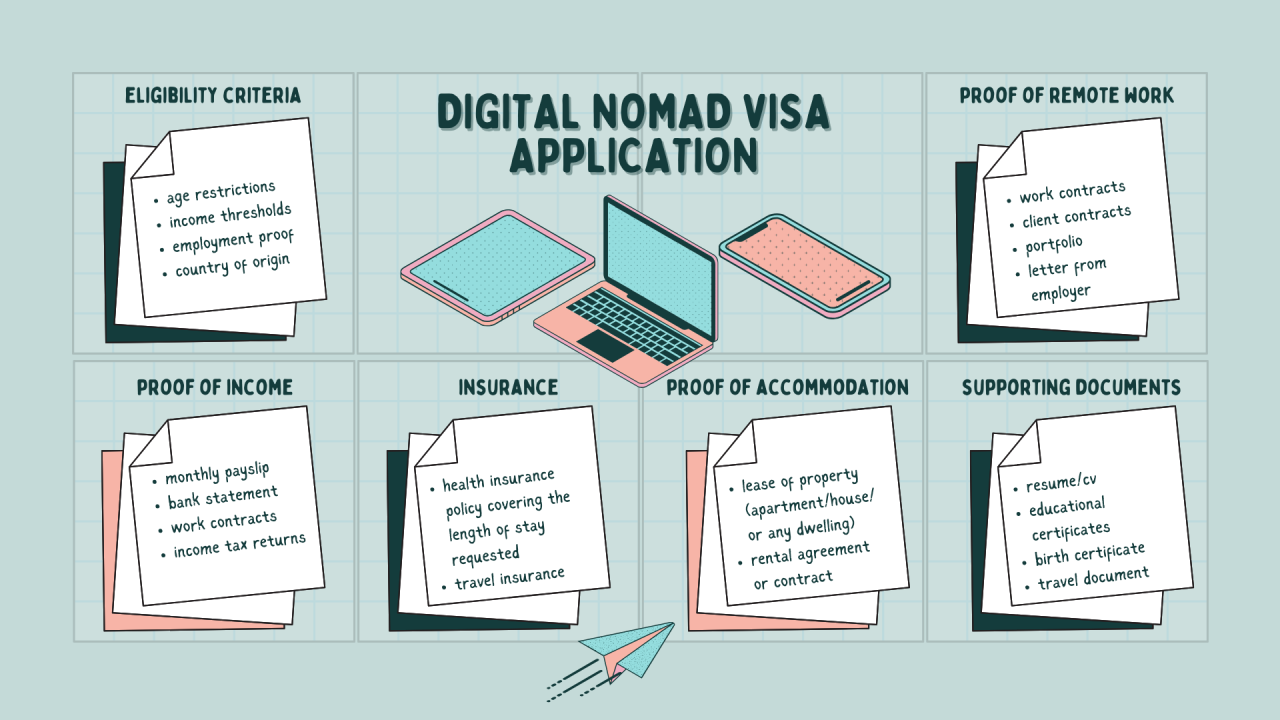
Most digital nomad visa programs share common requirements. The most consistent requirement is proof of sufficient income. A monthly income threshold of around $3,000 is typical, but this varies significantly. Portugal, for example, requires a minimum monthly income of €2,800 (approximately $3,050 as of May 2024), while Estonia’s requirement is €3,504 per month. Check the exact amount in the local currency and ensure your income meets or exceeds it.
Health insurance is another non-negotiable. Most programs demand comprehensive health insurance coverage for the duration of your stay. Some require a minimum coverage amount – Greece, for instance, asks for coverage of at least €30,000, while others, like Estonia, require coverage of at least EUR 42,600. The insurance must generally be valid internationally and cover emergency medical expenses, hospitalization, and repatriation. Simple travel insurance rarely suffices; you need a dedicated international health insurance plan.
Background checks are standard procedure. Most countries will require a police certificate from your home country and any country where you’ve resided for a significant period (usually six months or more). Obtaining these certificates can be time-consuming, so start the process early. Some countries, like Spain, require these certificates to be apostilled – a certification that authenticates the document for international use. Ignoring this detail can cause significant delays.
Many programs now also require proof of education or professional experience. A three-year bachelor’s degree is often accepted, but if you don’t have a degree, you can often substitute it with documented evidence of at least five years of relevant professional experience. This experience needs to be clearly demonstrated through employment contracts, letters from previous employers, or freelance contracts. Claiming experience alone won't suffice.
- Income Documentation: Bank statements, pay stubs, freelance contracts.
- Insurance Providers: SafetyWing, Cigna Global, IMG Global.
- Police Certificate Sources: Your home country’s national police agency, and agencies in countries where you’ve lived long-term.
Digital Nomad Visa Minimum Income Requirements - 2024
| Country | Monthly Income | Currency | Notes |
|---|---|---|---|
| Spain | 2,100 | EUR | Requirement is generally 2x the Spanish IPREM (Public Indicator of Rent and Income Effects). |
| Portugal | 2,800 | EUR | Minimum income requirement for the D7 Visa, often used by digital nomads. |
| Estonia | 3,504 | EUR | Based on 2023 data, approximately the average Estonian salary. Subject to annual adjustments. |
| Greece | 3,500 | EUR | Income must be demonstrated from sources outside of Greece. |
| Croatia | 2,600 | EUR | Requirement is updated annually and based on average Croatian net salary. |
| Colombia | 3,500 | USD | Approximately 10 times the Colombian minimum wage (as of early 2024). |
| Mexico | 2,700 | USD | Demonstrated monthly income or average bank balance over the past 12 months. |
| Thailand | 2,500 | USD | Income must be verifiable and consistent. Can also qualify with a bank balance. |
| UAE (Dubai) | 5,000 | AED | Approximately $1,360 USD. Requires health insurance and proof of remote work. |
| Argentina | 2,000 | USD | Income must be proven through bank statements or other official documentation. |
Data sourced from AI research — verify before making decisions
Top Destinations Ranked: Ease of Application, Cost of Living, and Lifestyle
Several countries have emerged as frontrunners in the digital nomad visa space. Spain, with its vibrant culture and relatively straightforward application process, is a popular choice. Expect a bureaucratic process, though – it can take 3-6 months to receive approval. The cost of living varies dramatically by city; Madrid and Barcelona are expensive, while Valencia and Seville are more affordable. A one-bedroom apartment in Valencia might cost around €900-€1,200 per month.
Portugal is another strong contender, known for its welcoming atmosphere and affordable cost of living. The D7 visa, while not specifically a digital nomad visa, is frequently used by remote workers. Lisbon and Porto are increasingly popular, but smaller cities like Lagos and Braga offer a more relaxed lifestyle and lower prices. Internet speeds are generally excellent throughout the country. The application process is comparatively efficient, taking around 2-4 months.
Estonia’s Digital Nomad Visa is known for its simplicity and efficiency. The application is entirely online, and approval can be relatively quick – often within a few weeks. However, Estonia’s high-tech focus isn't for everyone. The climate can be harsh in the winter, and the culture is reserved. Tallinn is a beautiful but expensive city; expect to pay around €1,000-€1,500 per month for a one-bedroom apartment.
Greece’s Digital Nomad Visa is widely considered one of the easiest to obtain, especially for non-EU citizens. The process is streamlined, and the requirements are relatively modest. The cost of living is significantly lower than in many other European countries, particularly outside of Athens and Mykonos. However, bureaucracy can still be an issue, and internet speeds can be inconsistent in some areas.
For a more budget-friendly option, Colombia is gaining traction. Medellin, in particular, has become a hub for digital nomads, with a low cost of living, a vibrant nightlife, and a growing co-working scene. However, safety concerns are a valid consideration, and it's essential to research neighborhoods carefully. The visa process is less straightforward than in Europe, and Spanish language skills are highly recommended.
The UAE, specifically Dubai, offers a premium experience for digital nomads. The visa is relatively easy to obtain for high earners, and the city boasts world-class infrastructure and a safe environment. However, the cost of living is extremely high, and the culture is conservative. Expect to pay upwards of $2,000 per month for a basic apartment.
The Application Process: A Step-by-Step Guide (With Common Mistakes to Avoid)
The application process generally follows these steps: 1. Research: Thoroughly investigate the requirements for your chosen country. Official government websites are the most reliable source of information. 2. Document Gathering: Collect all required documents – passport, proof of income, health insurance, police certificates, etc. 3. Translation: Translate any documents not in the official language of the host country. 4. Application Submission: Submit your application online or in person, depending on the country’s procedures. 5. Interview (if required): Some countries may require an interview. 6. Visa Issuance: If approved, you’ll receive your visa, typically within a few weeks or months.
One of the most common mistakes is submitting an incomplete application. Double-check the checklist and ensure you’ve included every required document. Another frequent error is providing incorrect or untranslated documents. Official translations from certified translators are usually required. Failing to meet the income requirements is also a common pitfall – ensure your income demonstrably meets the threshold.
Using a visa agency can streamline the process, but it’s not always necessary. Agencies can handle document preparation, translation, and application submission, saving you time and effort. However, they charge a fee for their services. If you’re comfortable navigating the bureaucracy yourself, you can save money by handling the application independently. If you do choose an agency, research thoroughly and select a reputable one with a proven track record.
Here are some helpful links to official government websites: Spain: https://extranjeros.inclusion.gob.es/en/ Portugal: https://www.sef.pt/en/ Estonia: https://www.migration.ee/eng Greece: https://www.migrantvisa.gov.gr/
Tax Implications for Digital Nomads: Where Do You Pay?
Tax residency is a complex topic, and it’s crucial to understand your obligations. Generally, you’re considered a tax resident in the country where you spend the majority of your time (typically more than 183 days in a 12-month period). However, your home country may also claim your income as taxable, depending on its tax laws. This can lead to double taxation.
Fortunately, many countries have double taxation treaties in place to prevent this. These treaties outline which country has the primary right to tax your income. It’s essential to research the tax laws of both your home country and your host country, and to understand the terms of any applicable treaties. For example, the US has tax treaties with many countries, including Spain and Portugal.
I am not a tax advisor, and this information should not be considered tax advice. The specific tax implications will vary depending on your individual circumstances. Consulting with a qualified tax professional specializing in international taxation is highly recommended. Resources like Nomad Tax (https://nomadtax.com/) and BrightTax (https://www.brighttax.com/) can provide helpful information, but they are not substitutes for professional advice.
Keeping meticulous records of your income, expenses, and travel dates is vital. This will make it easier to file your taxes accurately and to demonstrate your tax residency status if required.
Health Insurance for Nomads: Finding Coverage That Works
As mentioned, comprehensive health insurance is a mandatory requirement for most digital nomad visas. Travel insurance, while useful for short trips, typically doesn’t provide adequate coverage for long-term stays. You need a dedicated international health insurance plan that covers emergency medical expenses, hospitalization, and repatriation.
There are several types of plans available: Individual plans: Cover only you. Family plans: Cover you and your dependents. Short-term plans: Offer coverage for a limited duration (e.g., 3 months). Long-term plans: Provide coverage for a year or more. Key features to look for include coverage for pre-existing conditions, emergency evacuation, and mental health services.
Some recommended providers include SafetyWing: Popular among digital nomads due to its affordability and flexibility. Cigna Global: Offers comprehensive coverage with a global network of providers. IMG Global: Provides a range of plans to suit different needs and budgets. Compare quotes from multiple providers to find the best value for your money.
When selecting a plan, pay close attention to the policy’s exclusions and limitations. Some plans may not cover certain activities (e.g., extreme sports) or medical conditions. Ensure the plan covers you in all the countries you plan to visit. Read the fine print carefully before making a decision.
Essential Health Insurance for Digital Nomads
Global coverage · Covers medical emergencies and travel incidents · Flexible monthly subscription
SafetyWing is specifically designed for remote workers and digital nomads, offering flexible and affordable coverage.
Comprehensive international medical coverage · Worldwide network of healthcare providers · Includes preventative care and mental health support
Cigna Global offers robust and extensive health coverage, suitable for those seeking premium medical protection abroad.
Short-term and long-term travel medical plans · Covers emergency medical and evacuation expenses · Available for individuals and families
IMG Patriot provides flexible travel medical insurance options that can be tailored to various trip durations and needs.
Coverage for adventure sports and activities · 24/7 emergency assistance · Online policy management
World Nomads is a popular choice for adventurous digital nomads, offering comprehensive coverage that includes participation in many activities.
As an Amazon Associate I earn from qualifying purchases. Prices may vary.
Beyond the Visa: Building a Life on the Road (Community, Banking, and More)
Securing a visa is just the first step. Building a sustainable life as a digital nomad requires more than just a place to live and work. Finding community is crucial. Online forums like Nomad List (https://nomadlist.com/) and Facebook groups dedicated to digital nomads in specific locations can connect you with like-minded individuals. Co-working spaces are also excellent places to meet people and network.
Managing your finances requires careful planning. Opening an international bank account can simplify transactions and avoid excessive fees. Wise (formerly TransferWise) and Revolut are popular choices for currency exchange and international transfers. Be mindful of currency exchange rates and bank fees. I’ve found having a separate account specifically for nomad expenses keeps things organized.
Staying connected is essential for remote work. Ensure your chosen destination has reliable internet access. Consider purchasing an international SIM card for mobile data. Portable Wi-Fi hotspots can also be useful. I always check internet speed test results before committing to a long-term stay in a location.
Maintaining a healthy work-life balance is often the biggest challenge. Set boundaries between work and personal time. Prioritize self-care. Explore your surroundings. Embrace the freedom and flexibility that nomadic life offers. It’s easy to fall into the trap of working all the time, but remembering to enjoy the journey is vital.
What is your biggest challenge when considering or pursuing a digital nomad visa?
We're compiling insights on the digital nomad visa landscape. Share your primary concern below.
Future Trends: What's Next for Digital Nomad Visas?
The trend of countries offering digital nomad visas is likely to continue. We can expect to see more countries joining the ranks, particularly in Latin America and Southeast Asia. The application processes may become more streamlined and standardized, making it easier for remote workers to navigate the bureaucracy. I suspect we'll see more visas incorporating tiers based on income or skills.
The impact of remote work on the global economy will be significant. It could lead to a redistribution of wealth, as remote workers choose to live in more affordable locations. It could also stimulate economic growth in countries that actively attract digital nomads. However, it's important to address the potential downsides, such as gentrification and strain on local resources.
Responsible nomadism is key. We need to be mindful of the impact we have on the communities we visit and strive to be respectful of local cultures and traditions. Supporting local businesses, minimizing our environmental footprint, and contributing to the local economy are all important aspects of responsible travel.
The future looks promising for digital nomads. The demand for remote work is only expected to grow, and countries are increasingly recognizing the economic benefits of attracting this demographic. It's an exciting time to be a location-independent worker.

No comments yet. Be the first to share your thoughts!