

Faces at the Gate: Biometrics Today
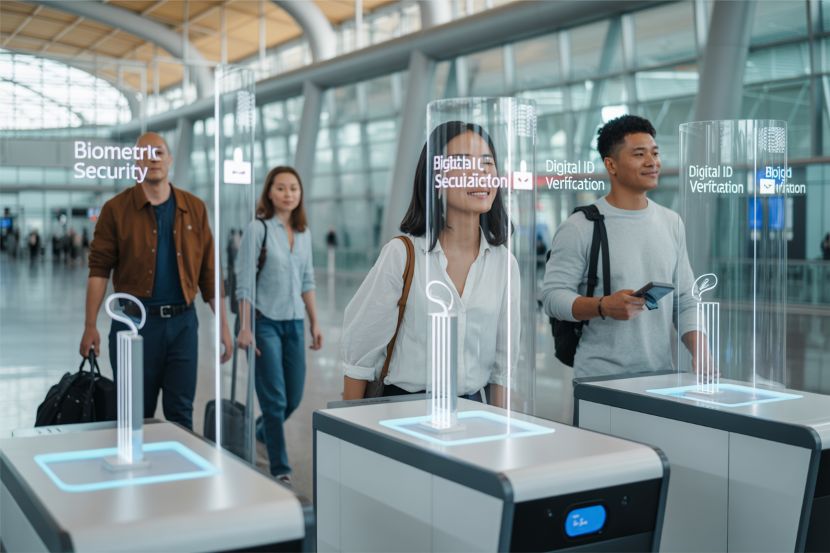
Walking through the airport without stopping to show your passport or boarding pass, with just a quick scan of your face, is becoming a reality. Biometric travel, especially facial recognition, is reshaping the airport experience.
Programs like Global Entry have used biometrics for years to streamline border crossings, demonstrating the potential for faster, more secure processing. We're moving from physical documents to automated systems that verify identity in real-time.
Facial recognition is most common at international arrivals and departures in select airports, matching your face to your passport or visa photo. The goal is to reduce wait times and enhance security by confirming identity. It's seamless for trusted traveler program members and increasingly available to all travelers at participating airports.
It's not universally implemented yet, with many airports still using traditional document checks. However, biometric technology is becoming more prevalent, promising faster and more efficient travel identification.
DHS Exit/Entry Rule: What’s Changing?
The Department of Homeland Security (DHS) is changing how travelers are tracked entering and leaving the U.S. Their Final Rule for the Biometric Entry/Exit Program moves toward a fully biometric system for most travelers.
The program aims to bolster national security and improve the travel experience. Collecting biometric data helps DHS identify individuals accurately, prevent fraud, and detect threats. A streamlined process should also mean shorter lines and less congestion at ports of entry.
The rule requires collecting biometric data, mainly facial images, from most non-U.S. citizens entering and departing. U.S. citizens aren't currently subject to mandatory biometric exit checks, but the rule allows for future expansion. The data verifies identities against databases.
Privacy is a key consideration. DHS states collected data will have strict safeguards, limiting access and retention. The rule outlines data protection procedures and ways for individuals to address concerns. However, data security and misuse concerns remain, addressed later.
Airports Leading the Charge
Several airports are implementing advanced biometric systems. Hartsfield-Jackson Atlanta International Airport, for example, has piloted and expanded facial recognition at international gates for years, reporting reduced processing times.
Detroit Metropolitan Airport offers a hands-free travel experience with its biometric entry and exit program. Passengers enroll and then move through security and immigration without documents, relying on secure facial feature matching to their profile.
Washington Dulles International Airport is deploying biometric technology to improve security and efficiency at international arrivals, integrating facial recognition to automate identity verification. Los Angeles International Airport (LAX) is expanding its use of biometric boarding gates to speed up boarding.
Challenges include ensuring accuracy, addressing privacy, and integrating new systems. However, reported benefits like reduced wait times, improved security, and a seamless traveler experience are driving investment and expansion.
Biometric Implementation at Major Airports (as of Late 2023/Early 2024)
| Airport Name | Biometric Checkpoints | Data Types Collected | Traveler Enrollment Options | Reported Wait Time Reduction |
|---|---|---|---|---|
| Hartsfield-Jackson Atlanta International Airport (ATL) | Departure, Arrival | Face | Global Entry, TSA PreCheck, Mobile Passport Control | Moderate |
| Los Angeles International Airport (LAX) | Departure, Arrival, Transit | Face, Fingerprint | Global Entry, TSA PreCheck, Enrollment on Arrival | Significant |
| O'Hare International Airport (ORD) | Departure, Arrival | Face, Iris | Global Entry, TSA PreCheck | Moderate |
| Dallas/Fort Worth International Airport (DFW) | Departure, Arrival | Face | Global Entry, TSA PreCheck | Minimal |
| John F. Kennedy International Airport (JFK) | Arrival, Preclearance (select airlines) | Face, Iris | Global Entry, TSA PreCheck | Moderate |
| Washington Dulles International Airport (IAD) | Departure, Arrival, Transit | Face, Iris | Global Entry, Mobile Passport Control | Significant |
| Miami International Airport (MIA) | Arrival | Face | Global Entry, Mobile Passport Control | Minimal |
Illustrative comparison based on the article research brief. Verify current pricing, limits, and product details in the official docs before relying on it.
Beyond the Face: Expanding Biometric Methods
While facial recognition is common, other biometric methods are being explored. Iris scanning, for example, is highly accurate and secure due to the unique, hard-to-replicate patterns in a person's iris.
Fingerprint scanning is reliable but less convenient than facial recognition. Hygiene concerns and potential inaccuracies with damaged or worn fingerprints limit its adoption. Gait analysis, identifying people by their walking style, is a futuristic approach still in early development.
Each method has pros and cons. Facial recognition is non-intrusive and uses existing cameras. Iris scanning is accurate but needs special equipment. Fingerprint scanning is established but less reliable. Gait analysis is potentially passive but faces technical hurdles.
A multi-factor biometric approach, combining methods, could offer high security. Accessibility is also a concern, as systems must accommodate individuals with disabilities or those who struggle with certain scans.
Global Entry & Mobile Passport: Your Current Options
To experience biometric travel benefits now, enroll in Global Entry or use Mobile Passport. Global Entry, run by U.S. Customs and Border Protection, lets pre-approved, low-risk travelers bypass traditional customs lines upon arrival in the U.S.
Eligibility requires U.S. citizenship, lawful permanent residency, or enrollment in certain trusted traveler programs. The application involves an online submission, background check, and interview. The $100 fee is valid for five years.
Global Entry also includes TSA PreCheck benefits for expedited security screening at participating airports, saving time and hassle during peak periods. Mobile Passport, a free app, lets eligible U.S. citizens and lawful permanent residents submit passport information via smartphone.
To use Mobile Passport, download the app, create a profile, and answer questions. Once approved, generate a 'Mobile Passport' barcode scanned at designated airports. It doesn't offer Global Entry's benefits but is a convenient, cost-effective option for occasional international travelers.
Privacy Concerns and Data Security
Collecting and storing biometric data raises privacy concerns: what data is stored and how is it protected? DHS states collected data is securely stored and used only for identity verification and enforcing immigration laws.
undefined to identity theft or other malicious activities. Regulations governing biometric data collection, such as the Privacy Act of 1974, aim to protect individual privacy, but ongoing vigilance is crucial.
Data retention policies are also important. How long is biometric data stored? What are the procedures for deleting data? Transparency in these areas is essential for building public trust. DHS has outlined procedures for individuals to request access to and correction of their biometric data, but these processes can be complex.
It’s important to remember that no system is entirely foolproof. While security measures are in place, the risk of unauthorized access or misuse of biometric data cannot be completely eliminated. A balanced approach – leveraging the benefits of biometric technology while addressing privacy concerns – is essential.
2026 and Beyond: The Future of Travel
Looking ahead to 2026 and beyond, the future of travel is likely to be increasingly biometric-driven. We could see the widespread implementation of fully automated border crossings, where travelers simply walk through a gate and are identified without any human intervention. This relies on advancements in facial recognition and other biometric technologies.
Biometric data could also become integrated with other travel services, such as airline check-in, hotel registration, and even retail purchases. Imagine checking into your flight simply by looking at a camera, or automatically receiving personalized offers based on your biometric profile. The possibilities are vast.
However, several challenges remain. The cost of implementing and maintaining biometric systems is significant. Infrastructure upgrades are needed at airports and border crossings worldwide. Public acceptance is also crucial. Addressing privacy concerns and building trust in the technology are essential for wider adoption.
While a completely seamless, fully automated travel experience may still be some years away, the trend is clear. Biometric technology is poised to revolutionize the way we travel, making it faster, more secure, and more efficient. Continued innovation and a focus on responsible implementation will be key to realizing its full potential.


No comments yet. Be the first to share your thoughts!