

How AI is changing travel
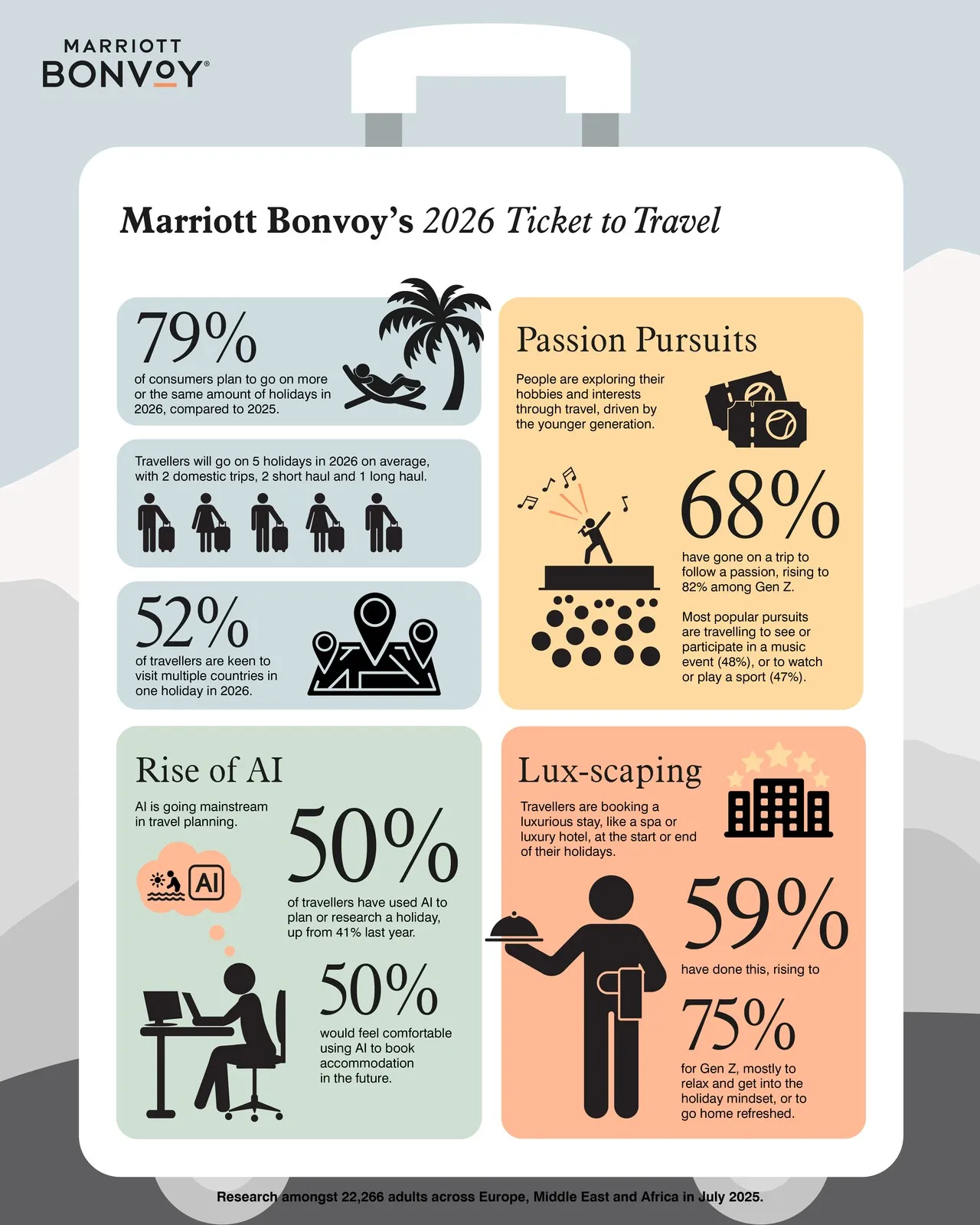
Artificial intelligence is rapidly changing how we approach travel. What was once a process of pouring over guidebooks and contacting travel agents is now increasingly handled by algorithms. AI is currently being utilized for tasks like searching for the best flight and hotel deals, suggesting potential destinations based on user preferences, and even predicting price fluctuations. There’s been a noticeable surge in interest recently; a CNBC report highlighted the growing number of travelers turning to AI for trip planning, despite some reservation.
AI isn't replacing travel agents yet. Global Rescue found that most travelers in 2026 still want a human to make the final call. We still value a person's expertise when an itinerary gets messy or a flight is canceled. Think of the tech as a high-speed assistant rather than a replacement for human judgment.
Currently, traveler trust remains a significant factor. While the convenience and efficiency of AI are appealing, many people are hesitant to fully relinquish control of their travel arrangements to an algorithm. Concerns about data privacy, algorithmic bias, and the potential for inaccurate information all contribute to this hesitancy. Building trust will be a key challenge for developers of AI travel tools.
Automated itinerary builders
The core functionality of many AI travel planners extends far beyond simply locating flights and hotels. These tools excel at creating automated travel itineraries, suggesting activities, restaurants, and transportation options tailored to a traveler's interests. Instead of just finding you a place to stay, they can build a day-by-day plan for your entire trip. This represents a significant leap forward from traditional travel search engines.
The level of customization available varies between platforms, but most allow users to specify their budget, preferred travel style (luxury, budget-friendly, adventure), and specific interests (history, food, art). Some tools even allow you to import existing travel plans or link to social media accounts to. This data is then used to generate a personalized itinerary. It's a world away from generic, one-size-fits-all travel packages.
A crucial challenge for these systems is the issue of 'hallucinations,' as reported by CNBC. This refers to AI generating inaccurate, misleading, or even completely nonsensical suggestions. Developers are actively addressing this through improved data validation, more robust algorithms, and the incorporation of human oversight. The goal is to minimize these errors and ensure the reliability of the generated itineraries. The quality of the output is directly tied to the quality of the underlying data.
- Set a realistic spending limit to help the algorithm filter out-of-reach options.
- Pick a travel style, like luxury or adventure, to set the tone of the suggestions.
- List specific hobbies so you don't end up with generic tourist trap recommendations.
The shift toward personalization
AI-powered travel planning truly shines in its ability to personalize the travel experience. Unlike traditional methods, AI doesn’t treat all travelers the same. It actively learns your preferences and tailors recommendations accordingly. This is achieved through a variety of data sources, including past travel history, stated interests, and even social media activity – though the extent to which this data is used varies between platforms.
The use of personal data raises legitimate privacy concerns. Travelers should be aware of how their information is being collected, stored, and used by these tools. Reputable AI travel planners will have clear privacy policies and offer users control over their data. Choosing providers with strong data security measures is essential. It’s always wise to read the fine print.
AI can particularly cater to niche travel styles. For example, someone interested in adventure travel might receive recommendations for hiking trails, rock climbing excursions, or extreme sports activities. A culinary tourist might be presented with cooking classes, food tours, and reservations at highly-rated restaurants. The potential for tailoring the travel experience to specific interests is virtually limitless.
Real-time help on the road
AI's utility isn’t limited to pre-trip planning; it also plays an increasingly important role during the journey itself. AI-powered systems can provide real-time flight delay notifications, suggest alternative routes in case of disruptions, and even offer translation services for travelers in foreign countries. This proactive assistance can significantly reduce stress and improve the overall travel experience.
AI-powered chatbots are becoming commonplace in the travel industry, offering instant customer service and support. These chatbots can answer frequently asked questions, help with booking changes, and even provide emergency assistance. They’re available 24/7, offering a level of convenience that traditional customer service channels can't match.
Some systems now spot disruptions before you even check your phone. If a storm is brewing, the software can automatically rebook your connection. This kind of proactive solving is where the tech actually earns its keep.
Sustainability and carbon tracking
AI has the potential to contribute significantly to more sustainable travel practices. By optimizing routes for lower carbon emissions, AI can help reduce the environmental impact of air travel. It can also recommend eco-friendly accommodations, such as hotels with sustainable certifications, and promote responsible tourism activities that support local communities.
AI can also assist travelers in offsetting their carbon footprint. Some platforms now offer carbon offsetting options, allowing travelers to invest in projects that reduce greenhouse gas emissions. AI can calculate the carbon footprint of a trip and suggest appropriate offsetting measures. It's not a perfect solution, but it’s a step in the right direction.
The ability of AI to analyze vast amounts of data can also help identify areas where travel patterns are unsustainable. This information can be used to develop strategies for promoting more responsible tourism and protecting fragile ecosystems.
Comparing current tools
Several AI travel planning tools are currently available, each with its own strengths and weaknesses. Kayak, for example, is known for its comprehensive flight search capabilities and price prediction features. Expedia offers a wide range of travel services, including flights, hotels, car rentals, and activities, all integrated into a single platform.
Google Travel provides a visually appealing interface and integrates seamlessly with other Google services, such as Google Maps and Google Calendar. Hopper focuses on predicting flight and hotel prices, helping travelers find the best deals. These tools each offer a unique approach to AI-powered travel planning.
It’s important to note that the features and functionality of these tools are constantly evolving. What sets them apart today may change tomorrow. The best way to find the right tool for you is to experiment with different platforms and see which one best meets your individual needs and preferences. Don’t be afraid to try several options.
How comfortable are you letting AI plan the majority of your next trip?
AI-powered travel planning tools are rapidly changing how we research destinations, book flights, and build itineraries. As these technologies become more sophisticated in 2026, we want to know where our community of global travelers stands. Vote below and share your perspective in the comments!
Where the tech is headed
Looking ahead to 2026 and beyond, we can expect even more sophisticated AI-powered travel planning tools. Personalization will become increasingly refined, with AI learning to anticipate traveler needs and preferences with greater accuracy. Integration with augmented reality (AR) and virtual reality (VR) could allow travelers to virtually explore destinations before booking a trip.
The development of truly autonomous travel agents – AI systems capable of handling all aspects of travel planning without human intervention – is a possibility, though likely still some years away. However, ethical concerns and data privacy issues will need to be addressed before such systems can be widely adopted. Concerns about algorithmic bias and the potential for job displacement also need to be considered.
The tech is getting better, but privacy and accuracy remain hurdles. If developers focus on being transparent about how they use our data, these tools will likely become a standard part of every trip we take.
AI Travel Planning Tool Comparison - 2026
| Tool Name | Best For | Ease of Use | Customization Options | Transparency of Recommendations |
|---|---|---|---|---|
| Wanderlog | Detailed itinerary building | Very High - intuitive interface | Good - flexible activity adding | Moderate - explains some choices, but not all |
| Google Travel | Quick trip overviews & flight/hotel search | High - familiar Google design | Moderate - focuses on core options | Moderate - relies heavily on established ranking factors |
| Roam Around | Spontaneous exploration & local gems | Moderate - requires some learning | High - strong focus on personalized interests | Lower - discovery focused, less explanation of ranking |
| Kayak Explore | Budget-focused destination discovery | High - simple map-based interface | Limited - primarily filters, not deep customization | Moderate - shows price comparisons, but limited reasoning |
| Inspirock | Complex, multi-city trips | Moderate - steeper learning curve | Very Good - detailed daily schedule control | Moderate - provides rationale based on popularity/reviews |
Qualitative comparison based on the article research brief. Confirm current product details in the official docs before making implementation choices.



No comments yet. Be the first to share your thoughts!