

AI's Role in Travel Today
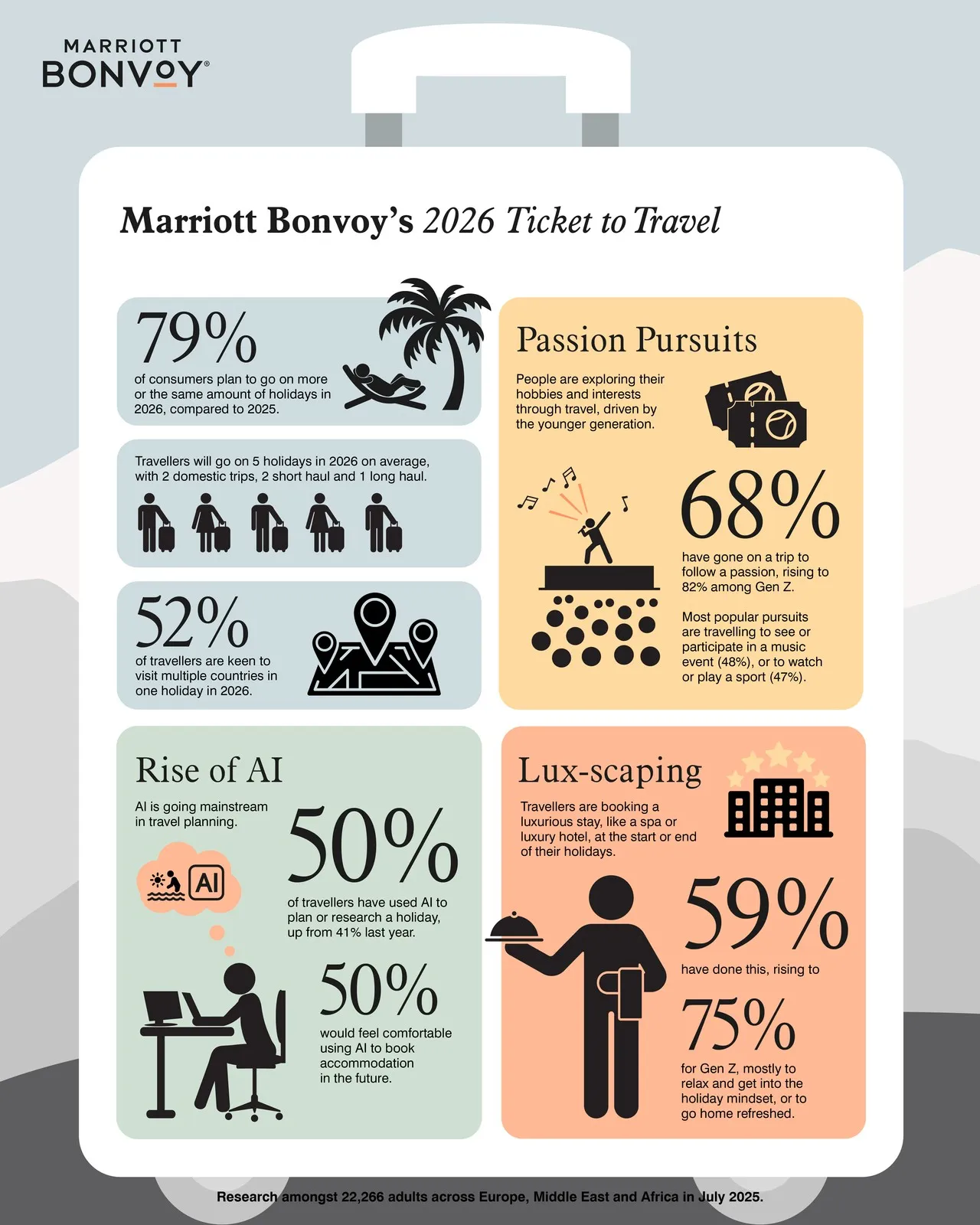
AI already helps us travel, mostly by making things more efficient. Think of flight suggestions based on your searches or chatbots answering simple questions. These tools smooth out the existing travel process.
Global Rescue’s 2026 outlook shows travelers see AI as a helper, not the boss. We use it for price checks and deals, but humans still decide where to go and what to do. This means AI won't be taking over travel planning anytime soon.
We need to remember AI's current limits. CNBC articles point out 'hallucinations,' where AI makes up wrong information. This happens because of how AI learns. Developers are fixing it, but travelers should know AI isn't always right.
Right now, AI in travel augments, it doesn't automate. It speeds things up but still needs human oversight. This is the base for future AI travel planning.
Beyond Booking: AI Trip Planners Emerge
AI is now building full, personalized trip itineraries, not just booking flights and hotels. These planners suggest daily activities, restaurants, transport, and costs. TakeUp AI notes these platforms are getting much more sophisticated.
These planners use lots of data: your past travel, stated interests, weather, local events, and social media trends. This lets them create custom itineraries. For example, an AI could suggest a jazz club if it knows you like live music and a famous artist is playing.
AI planners differ from travel agents in scale and personalization. Agents build relationships but are limited by time and knowledge. AI processes more data for hyper-personalization. Still, the human touch—understanding nuance and offering support—is valuable.
These AI planners show potential to change travel planning, making it seamless and personalized. However, they can't yet replace skilled travel professionals.
- AI Trip Planner Features:
- Personalized itinerary creation
- Activity and restaurant suggestions
- Transportation planning
- Cost estimation
- Real-time data integration (weather, events)
AI Travel Planning 2026: How Smart Agents Are Redefining the Itinerary - Vagabond Diaries https://t.co/1iNS5sbHxg
— Startups Pro,Inc (@StartupsProInc) March 26, 2026
The 2026 Forecast: Smarter, More Adaptive Trips
By 2026, AI will be more integrated into travel. Predictive disruption alerts are a key advancement. AI will analyze flight schedules, weather, and political reports to warn travelers of problems, like a flight delay before it's announced.
AI will also adjust itineraries in real-time. If your flight is delayed and your train is at risk, an AI assistant could rebook the train, suggest new routes, and tell your hotel about your late arrival. This adaptability is important as disruptions become more common.
Better natural language processing (NLP) will help. We'll talk to AI assistants naturally, asking questions without specific commands. This makes the experience easier. Still, perfect accuracy isn't guaranteed.
By 2026, AI will have enhanced capabilities, not complete automation. It will be a powerful co-pilot, but travelers still need judgment and adaptability for unforeseen issues. The aim is better uncertainty management, not elimination.
- 2026 AI Travel Predictions:
- Predictive travel disruption alerts
- Real-time itinerary adjustments
- Improved natural language processing
- Enhanced personalization based on behavioral data
AI and Travel Safety: A Growing Partnership
AI can significantly improve travel safety. Real-time risk assessments using location data and news feeds can warn travelers of dangers like unrest or natural disasters, helping them adjust plans or avoid risky areas. This supports Global Rescue’s mission.
AI can also automate emergency contact notifications. If a traveler is in trouble, an AI assistant can alert contacts with their location and emergency details, which is useful if they can't communicate. AI translation tools also help overcome language barriers when seeking help.
Using AI for travel safety raises ethical questions. Location data must be handled responsibly, prioritizing privacy and security. Travelers need to know how their data is used and control privacy settings. Transparency builds trust.
AI and travel safety is a promising development. Using data and analytics can create safer travel. We must address ethical issues and protect traveler privacy.
Hallucinations & Trust: The Remaining Hurdles
The issue of AI "hallucinations’ – the generation of incorrect or misleading information – remains a significant hurdle to widespread adoption. As highlighted by CNBC, these instances erode traveler trust and raise concerns about the reliability of AI-powered recommendations. These errors aren"t intentional; they stem from the way AI models are trained and the inherent limitations of current technology.
Hallucinations occur because AI models are designed to identify patterns in data and generate text that conforms to those patterns. They don’t necessarily "understand’ the information they’re processing. This can lead to the creation of plausible-sounding but factually incorrect statements. For example, an AI might suggest a restaurant that doesn"t exist or provide inaccurate information about visa requirements.
Developers are actively working to mitigate this problem through techniques like reinforcement learning and improved data validation. However, it's unlikely that hallucinations will be completely eliminated anytime soon. This underscores the importance of verifying information provided by AI tools, especially when it comes to critical details like flight schedules and safety advisories.
Bridging the trust gap requires transparency and accountability. AI developers need to be upfront about the limitations of their systems and provide users with clear mechanisms for reporting errors. Travelers, in turn, need to approach AI-powered recommendations with a healthy dose of skepticism and exercise their own judgment.
Top AI Travel Tools to Watch
Several AI-powered travel tools are demonstrating significant promise. Roam Around excels at discovering hidden gems and creating personalized itineraries based on user interests. It's particularly strong at suggesting off-the-beaten-path experiences. However, its reliance on user-generated content means the accuracy of recommendations can vary.
Wanderlog is a comprehensive trip planning platform that leverages AI to build detailed itineraries, manage bookings, and collaborate with travel companions. It integrates with various travel services and offers a user-friendly interface. It’s a solid all-in-one option, but can feel overwhelming for simple trips.
Kayak’s Explore feature, powered by AI, helps users discover potential destinations based on their budget and travel dates. It’s a great starting point for inspiration, but lacks the granular personalization of some other tools. Google Travel similarly offers AI-powered features for flight and hotel search, but its itinerary planning capabilities are still developing.
Curiosio focuses on providing hyper-local recommendations, connecting travelers with unique experiences curated by local experts. It’s ideal for travelers seeking authentic cultural immersion, but its coverage is currently limited to select destinations. Pilot is a relatively new entrant, offering an AI travel agent accessible via WhatsApp, providing a conversational way to plan trips. It’s still early days, but shows potential.
Troupe is designed for group travel, using AI to coordinate schedules, preferences, and bookings for multiple travelers. It simplifies the often-complex process of planning trips with friends or family. These tools aren’t perfect, but they represent the leading edge of AI-powered travel planning.
AI Travel Planning Tool Comparison - 2026
| Tool Name | Key Features | Strengths | Weaknesses | Best For |
|---|---|---|---|---|
| Wanderlog | Itinerary planning, collaborative features, map integration, budget tracking. | Strong for detailed itinerary creation and sharing with travel companions. Offers a visually appealing interface. | Can be time-consuming to input all details manually. Relies on user input for accuracy. | Group trips and travelers who enjoy meticulous planning. |
| Google Travel | Flight and hotel search, price tracking, explore destinations, trip organization. | Seamless integration with other Google services. Comprehensive search capabilities and price alerts. | Can sometimes feel overwhelming with the amount of information presented. Personalization may not always be accurate. | Budget-conscious travelers and those already invested in the Google ecosystem. |
| Kayak | Flight, hotel, and car rental search, price alerts, explore destinations. | Excellent for comparing prices across multiple providers. Strong price prediction features. | Interface can be cluttered with advertisements. Customer service can be inconsistent. | Finding the best deals on flights, hotels, and rental cars. |
| Roam Around | AI-powered trip generation based on interests, interactive map, daily itinerary suggestions. | Generates trip ideas quickly based on user preferences. Offers a unique, exploratory approach to planning. | Itineraries may require significant customization. Relies heavily on AI suggestions which may not always align with individual tastes. | Travelers seeking inspiration and a starting point for their trip planning. |
| Bing Travel | Flight and hotel search, price prediction, destination information, visual exploration. | Offers a visually rich experience with destination imagery and interactive maps. Price prediction tools can be helpful. | Search results may not be as comprehensive as other platforms. Integration with Microsoft ecosystem is a key feature. | Travelers who appreciate visual planning and are familiar with Microsoft products. |
| Inspirock | Automated itinerary generation, personalized recommendations, map integration, activity suggestions. | Creates detailed, day-by-day itineraries with minimal user input. Adapts to user feedback. | Can sometimes suggest tourist traps or less authentic experiences. Customization options are limited. | Travelers who want a fully planned itinerary with minimal effort. |
Illustrative comparison based on the article research brief. Verify current pricing, limits, and product details in the official docs before relying on it.
The Human Element: AI as a Co-Pilot
As Global Rescue’s research indicates, travelers don’t envision AI replacing human expertise, but rather augmenting it. This is a crucial point. The most effective approach to travel planning involves combining the analytical power of AI with the empathy, judgment, and local knowledge of human travel professionals. AI can process vast amounts of data and identify patterns, but it can’t replicate the human ability to understand nuance and respond to unexpected situations.
AI can be a valuable tool for research and inspiration, but it shouldn’t be the sole source of information. Travelers should always verify recommendations and exercise their own critical thinking skills. Engaging with local experts – tour guides, hotel staff, restaurant owners – can provide insights that AI simply can’t access.
The joy of travel often lies in the unexpected discoveries and spontaneous adventures. Over-reliance on AI can stifle this sense of wonder and reduce travel to a purely transactional experience. AI should be used to enhance the travel experience, not to eliminate the element of surprise.
Ultimately, AI is a powerful tool, but it’s just that – a tool. It’s up to us to use it responsibly and thoughtfully, combining its capabilities with our own human intuition and desire for exploration. The future of travel isn’t about AI versus humans; it’s about AI and humans working together to create more enriching and fulfilling travel experiences.
Content is being updated. Check back soon.



No comments yet. Be the first to share your thoughts!