

The Rise of Remote Work & The Digital Nomad Lifestyle
Work has changed dramatically. Remote work, once a niche idea, is now mainstream, fueling a surge in the digital nomad lifestyle. The 2020 pandemic forced companies to adopt remote work policies, proving productivity doesn’t need an office. Many companies have permanently embraced hybrid or fully remote models.
The appeal is clear. Digital nomads, people who work remotely and live location-independently, are drawn to the freedom and flexibility this lifestyle offers. It’s about designing a life around experiences, exploring new cultures, and prioritizing work-life balance. I’ve spoken to many who tried remote work temporarily and found they couldn’t go back to a conventional office.
This isn't a fleeting trend; it's a fundamental change in how people view their careers and lives. People prioritize experiences over possessions, and the ability to work from anywhere unlocks possibilities. Demand for digital nomad visas is a direct result of this shift, as individuals seek legal pathways to live and work remotely globally. This movement is reshaping travel and immigration.
Numbers reflect this change. While precise figures are hard to pin down, estimates suggest the digital nomad population is growing rapidly, with some reports indicating a surge of over 100% in the last few years. This demand has prompted governments worldwide to recognize the economic benefits of attracting remote workers and create tailored visa programs.
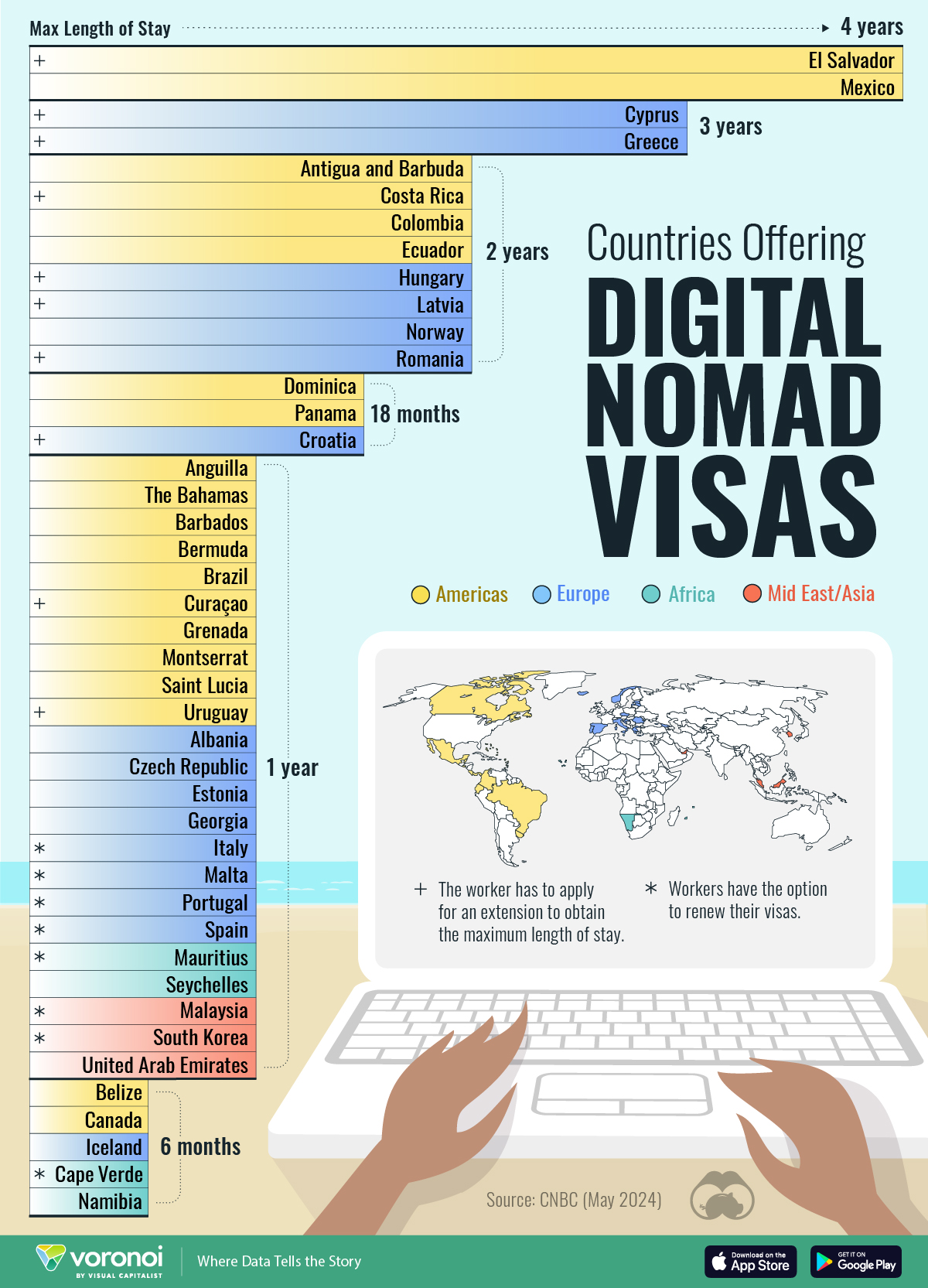
Understanding Digital Nomad Visas: What They Are & Aren’t
A digital nomad visa is for individuals who earn income remotely from sources outside the issuing country. It allows legal residency while you continue working for a foreign employer or running your own online business. These programs are new, with the first emerging in the last few years, and they are still evolving.
Understand what a digital nomad visa isn’t. It’s not a free pass to live anywhere indefinitely, nor is it the same as a standard tourist visa, which prohibits paid work. Digital nomad visas have specific requirements and conditions; violating them can lead to visa cancellation and immigration consequences. You are still subject to the laws of the country you reside in.
Common requirements include a minimum monthly income threshold (often $2,000 to $3,500, but varying by country), proof of remote employment (a contract or letter from your employer), comprehensive health insurance, and a clean criminal record. Many countries require applicants to demonstrate sufficient funds and may conduct background checks. Some programs also require proof of accommodation.
There's a distinction between a visa and a permit. A visa is issued before you travel, allowing entry and then application for a residence permit. A permit is granted after you've entered the country. The process and duration of stay can differ. Always check the specific requirements for the country you plan to visit.
- Proof of Income: Bank statements, employment contracts, or business registration documents.
- Health Insurance: Comprehensive coverage with international validity.
- Accommodation: Proof of address, such as a rental agreement or hotel booking.
- Background Check: Criminal record check from your home country.
Europe: A Hotspot for Remote Work Visas
Europe is leading in offering digital nomad visas, with countries recognizing the economic benefits of attracting remote workers. Portugal was an early mover, launching its D7 visa in 2022, which has become incredibly popular. To qualify, applicants need to demonstrate a passive income of at least €8,460 per year, although the digital nomad version has a higher income requirement.
Spain also offers a digital nomad visa, requiring applicants to demonstrate a minimum income of €2,172 per month and health insurance. The application process can be somewhat bureaucratic, and it's advisable to start well in advance. Germany has a 'freelancer visa' that’s often used by digital nomads, but it requires demonstrating a viable business plan and contributing to the German social security system. It’s a good option if you’re planning to establish a long-term presence.
Croatia introduced its digital nomad visa in January 2021, offering a relatively straightforward application process. You’ll need to prove an income of at least €24,000 per year and demonstrate that you're not employed by a Croatian company. Greece offers a similar visa, with an income requirement of €3,500 per month. Estonia’s digital nomad visa is known for its efficiency, but it’s primarily geared towards entrepreneurs and company owners.
Iceland, while beautiful and appealing, has a high cost of living and a stricter income requirement – around €75,000 per year – making it less accessible for many. It’s important to factor in the cost of living when choosing a country. Some programs, like Portugal’s, also offer tax benefits, while others don’t. The length of stay varies, with most visas lasting between six months and two years, with the possibility of renewal.
Beyond Europe: Global Options for Digital Nomads
While Europe is a frontrunner, opportunities for digital nomads exist across the globe. In the Americas, Brazil is gaining traction, with some reports suggesting it’s becoming more accommodating to remote workers, although navigating the bureaucracy can be challenging. Mexico offers a temporary resident visa that can be used for remote work, but it requires a certain level of financial stability.
Barbados launched a “Welcome Stamp” visa, allowing remote workers to live and work on the island for up to a year. Costa Rica offers a digital nomad visa with an income requirement of $3,000 per month and a mandatory health insurance policy. These Central and South American countries offer a lower cost of living and a vibrant culture.
In Asia, Thailand has been a long-time favorite among digital nomads, but its visa regulations are constantly changing. Indonesia is also popular, particularly Bali, but you’ll need to carefully research the visa options and ensure you comply with local laws. Malaysia offers a DE Rantau Nomad Pass, aimed at attracting foreign digital workers, but it has specific eligibility criteria.
Africa is a bit more challenging, with fewer established digital nomad programs. Mauritius offers a Premium Visa, allowing long-stay visitors to work remotely, but the requirements can be complex. Cape Verde is also exploring options for attracting digital nomads, but information is limited. I’m not sure about the specifics of some African programs, and it’s essential to conduct thorough research and consult with local immigration experts before making any plans.
Navigating Income & Taxes as a Digital Nomad
Dealing with income and taxes as a digital nomad is arguably the most complicated aspect of the lifestyle. It's not as simple as just earning money and spending it. You need to understand your home country’s tax obligations, as well as the tax laws of the country where you’re residing. Many countries have double taxation agreements in place to prevent you from being taxed twice on the same income, but navigating these agreements can be tricky.
Typically, you'll be considered a tax resident of the country where you spend the majority of your time. However, the rules can vary, and it's essential to understand the specific criteria for each country. You may also be required to file taxes in your home country, even if you’re living abroad. Failing to comply with tax laws can result in penalties and legal issues.
Setting up a business structure can also have tax implications. Operating as a sole proprietor is the simplest option, but it may not offer the same tax advantages as forming an LLC or other business entity. It’s also important to consider banking considerations. Opening a local bank account can simplify transactions and reduce fees, but it may require proof of residency.
I strongly recommend consulting with a tax professional specializing in international taxation. They can provide personalized advice based on your specific circumstances and help you navigate the complex world of cross-border taxation. Don’t try to DIY this – the potential costs of making a mistake are significant.
- Tax Residency: Determine where you’re considered a tax resident.
- Double Taxation Agreements: Understand if your countries have a treaty.
- Business Structure: Choose the right entity for your business.
- Local Banking: Consider opening a bank account in your country of residence.
Digital Nomad Visa Comparison: 2024
| Country | Income Tax Rate (Approximate) | Residency Requirement (Days/Year) | Double Taxation Agreements (US/UK/Canada) | Minimum Income Requirement (Approximate) |
|---|---|---|---|---|
| Portugal | 20% (Non-Habitual Resident regime offers potential tax benefits for 10 years) | 183 | US: Yes / UK: Yes / Canada: Yes | $2,800/month |
| Spain | 19-47% (Progressive tax rates) | 183 | US: Yes / UK: Yes / Canada: Yes | $2,300/month |
| Germany | Up to 45% (Progressive tax rates) | 180 | US: Yes / UK: Yes / Canada: Yes | $3,700/month |
| Estonia | 20% (Corporate tax for self-employed individuals) | 183 | US: Yes / UK: Yes / Canada: Yes | $3,504/month |
| Croatia | 15% (Flat tax rate option available) | 183 | US: Yes / UK: Yes / Canada: Limited | $2,400/month |
| Thailand | 0-35% (Progressive tax rates) | 180 | US: Yes / UK: Yes / Canada: Yes | $30,000/year |
| Mexico | 0-35% (Progressive tax rates) | 180 | US: Yes / UK: Yes / Canada: Yes | $1,620/month |
Data sourced from AI research — verify before making decisions
Health Insurance & Safety for Remote Workers
Health insurance is absolutely non-negotiable for digital nomads. Traditional health insurance plans often don’t provide adequate coverage when you’re traveling internationally. You need a plan specifically designed for expats or digital nomads that covers medical emergencies, evacuation, and pre-existing conditions. It's easy to assume 'it won't happen to me,' but medical emergencies can be incredibly expensive abroad.
Some popular providers include SafetyWing, which offers affordable plans specifically tailored for remote workers; World Nomads, known for its adventure travel coverage; and Cigna Global, which provides comprehensive international health insurance. Compare the different plans carefully, paying attention to coverage limits, deductibles, and exclusions. Make sure the plan covers the activities you plan to participate in.
Safety is another critical consideration. Research the travel advisories for the countries you plan to visit and be aware of local laws and customs. Protect your belongings from theft and be cautious in crowded areas. It’s also a good idea to register with your embassy or consulate so they can contact you in case of an emergency.
Being prepared for the unexpected is key. Carry a copy of your passport and visa, have a backup plan for your finances, and let someone know your travel itinerary. Invest in a good travel lock, learn a few basic phrases in the local language, and trust your instincts.
- SafetyWing: Affordable plans for remote workers.
- World Nomads: Adventure travel coverage.
- Cigna Global: Comprehensive international health insurance.
Essential Travel Insurance for Digital Nomads: Secure Your Global Adventures
Global coverage for medical emergencies · Includes trip interruption and cancellation · Designed for remote workers and travelers
SafetyWing is specifically tailored for digital nomads, offering flexible monthly plans that cover medical needs and travel disruptions worldwide.
Comprehensive medical and emergency coverage · Adventure sports and activities included · 24/7 emergency assistance
World Nomads provides robust insurance for adventurous digital nomads, ensuring coverage for both health and unexpected events during extensive travel.
Long-term international medical coverage · Worldwide network of medical providers · Optional add-ons for travel benefits
This plan offers excellent long-term medical coverage essential for digital nomads who plan to stay abroad for extended periods, ensuring access to quality healthcare.
Comprehensive international health insurance · Access to a global network of doctors and hospitals · Customizable plans for different needs
Cigna Global provides a high level of international health insurance, ideal for remote workers seeking reliable medical care and peace of mind across various countries.
Covers medical emergencies and evacuation · Includes trip cancellation and interruption · Personal liability coverage
Allianz offers a comprehensive plan that bundles essential travel protections, making it a solid choice for digital nomads who want broad coverage for their journeys.
As an Amazon Associate I earn from qualifying purchases. Prices may vary.
Common Application Mistakes & How to Avoid Them
Based on experiences shared by digital nomads, there are several common mistakes applicants make when applying for visas. One of the most frequent is submitting an incomplete application. Carefully review the requirements and ensure you’ve provided all the necessary documents. Missing a single document can lead to delays or rejection.
Insufficient proof of income is another common issue. You need to demonstrate that you have a stable and sufficient income to support yourself without relying on local employment. Providing clear and verifiable documentation, such as bank statements and employment contracts, is crucial. Another mistake is failing to meet the health insurance requirements. Ensure your plan provides adequate coverage for the entire duration of your stay.
Not understanding the visa conditions is a significant error. Read the fine print carefully and be aware of any restrictions or limitations. For example, some visas prohibit you from taking on local employment. I spoke with a nomad in Portugal who had her visa denied because she hadn't fully understood the income documentation requirements.
To avoid these pitfalls, start the application process well in advance, gather all the required documents, and carefully review the instructions. Consider seeking guidance from an immigration lawyer or consultant if you’re unsure about any aspect of the application.
- Incomplete Application: Double-check your documentation.
- Insufficient Income Proof: Provide verifiable financial statements.
- Inadequate Health Insurance: Ensure comprehensive coverage.
- Misunderstanding Visa Conditions: Read the fine print carefully.
Resources & Further Research
Staying informed is essential, as visa requirements can change frequently. Here are some helpful resources to get you started: Lano.io is a comprehensive database of digital nomad visas and permits. Citizen Remote provides up-to-date information and resources for remote workers. Deel and RemoFirst are platforms that offer global payroll and compliance solutions.
For official government websites, search for the immigration department of the country you’re interested in. Online communities, such as Facebook groups and Reddit forums, can provide valuable insights and support from other digital nomads. Remember to verify the information you find online with official sources.
If you need personalized tax advice, consult with a tax professional specializing in international taxation. Many firms offer remote consultations. Be prepared to invest time and effort into researching and planning your digital nomad journey – it’s a complex undertaking, but the rewards can be immense.
- Lano.io: Digital nomad visa database.
- Citizen Remote: Remote work resources.
- Deel/RemoFirst: Global payroll and compliance.

No comments yet. Be the first to share your thoughts!