
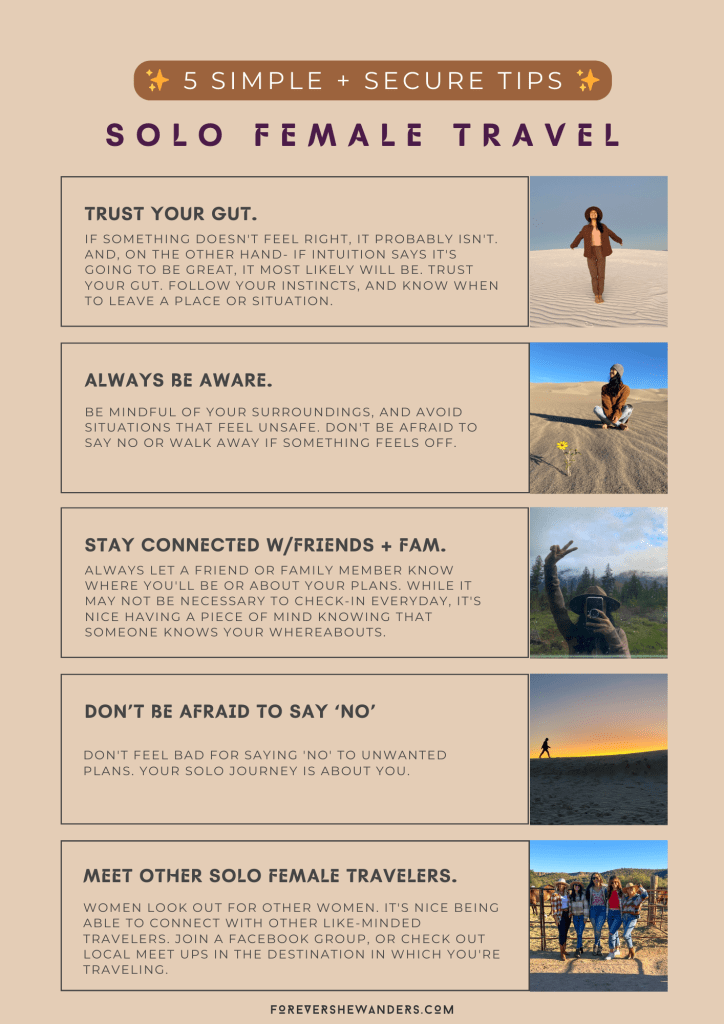

Understanding the Current Landscape of Solo Female Travel
Solo female travel has experienced unprecedented growth in 2024, with women increasingly seeking independence, cultural immersion, and personal empowerment through solo journeys. According to the latest data, searches for solo female travel safety have increased by 600% compared to pre-pandemic levels, demonstrating both the growing interest and heightened awareness of safety considerations among female travelers.
While this surge in solo female travel represents a positive shift toward gender equality in travel, it also highlights the unique challenges and safety considerations that women face when traveling alone. The 2025 Virtuoso Global Luxury Traveler Report reveals that 68% of solo female travelers still express safety concerns, though this represents a slight improvement from 70% in 2023, indicating growing confidence in the solo travel community.
Essential Pre-Travel Safety Preparation
Effective solo female travel safety begins long before departure. The foundation of a secure journey lies in thorough preparation and strategic planning that addresses potential risks while maintaining the freedom and spontaneity that makes solo travel so rewarding.
Research remains your most powerful safety tool. Understanding your destination's cultural norms, local laws, common scams, and current political climate provides essential context for making informed decisions throughout your journey. Pay particular attention to dress codes, social customs, and areas to avoid, especially during certain times of day.
Documentation and Communication Strategies
Proper documentation management serves as your safety net in emergency situations. Create multiple copies of essential documents including your passport, visa, travel insurance, emergency contacts, and itinerary. Store these in separate locations and maintain digital copies in secure cloud storage accessible from any device.
Essential Documents to Copy and Backup
- Passport and Visa Documents - Make multiple photocopies of your passport's main page and any visas, storing copies in your luggage, carry-on, and with a trusted contact at home. Upload high-resolution scans to secure cloud services like Google Drive or Dropbox.
- Travel Insurance Policy - Keep physical and digital copies of your complete travel insurance policy, including emergency contact numbers and claim procedures. Ensure the policy covers solo female travel scenarios and medical evacuation if needed.
- Emergency Contact Information - Create a comprehensive list including family contacts, your country's embassy or consulate numbers, local emergency services, and your bank's international customer service line. Store in multiple formats and locations.
- Detailed Travel Itinerary - Document all accommodation addresses, flight confirmations, transportation bookings, and planned activities with dates and times. Share this complete itinerary with trusted contacts and keep both digital and physical copies accessible.
- Financial Information Backup - Record credit card numbers, bank account details, and customer service phone numbers separately from the actual cards. Use password-protected documents stored in secure cloud storage like LastPass or 1Password.
- Medical Information and Prescriptions - Copy all prescription medications with generic names, medical conditions, allergies, and emergency medical contacts. Include your doctor's contact information and any medical insurance cards.
- Digital Storage Strategy - Use multiple secure cloud platforms such as iCloud, Google Drive, or Microsoft OneDrive to store encrypted copies. Ensure offline access capability and share access credentials with a trusted emergency contact at home.
Establish a reliable communication plan with trusted contacts at home. Share your detailed itinerary, including accommodation addresses, transportation details, and planned activities. Set up regular check-in schedules and establish code words or phrases that can discreetly signal if you need help.
Technology and Safety Tools for 2024
Modern technology offers unprecedented safety resources for solo female travelers. GPS tracking apps, emergency alert systems, and secure communication platforms can provide peace of mind and rapid assistance when needed.
Download offline maps and translation apps before departure to maintain navigation and communication capabilities even without internet access. Consider investing in a reliable power bank to ensure your devices remain charged throughout long travel days.
Destination-Specific Safety Considerations
Safety requirements vary significantly across different regions and cultures. What works in Scandinavia may not apply in Southeast Asia or Latin America. Understanding these regional differences allows you to adapt your safety strategies appropriately.
Top 20 Safest Countries for Solo Female Travelers 2024
| Country | Global Peace Index Rank 2024 | Women Safety Score | Solo Female Travel Rating | Key Safety Features |
|---|---|---|---|---|
| Iceland | 1 | 9.8/10 | Excellent | Lowest crime rates globally, strong gender equality laws, reliable infrastructure |
| Denmark | 2 | 9.6/10 | Excellent | High trust society, efficient public transport, comprehensive social safety net |
| Ireland | 3 | 9.4/10 | Excellent | English-speaking, friendly locals, low violent crime rates, good healthcare |
| New Zealand | 4 | 9.3/10 | Excellent | Adventure tourism infrastructure, strong rule of law, helpful local culture |
| Austria | 5 | 9.2/10 | Very Good | Central European location, excellent public transport, low harassment rates |
| Singapore | 6 | 9.1/10 | Very Good | Strict law enforcement, multicultural safety, world-class infrastructure |
| Portugal | 7 | 8.9/10 | Very Good | Affordable travel costs, welcoming culture, low petty crime in tourist areas |
| Slovenia | 8 | 8.8/10 | Very Good | Compact size for easy navigation, outdoor activity safety, EU standards |
Northern European countries consistently rank highest for solo female travel safety, with Iceland, Norway, and Denmark leading global safety indices. However, many destinations traditionally considered challenging for solo female travelers have implemented significant improvements in tourist safety infrastructure and women's rights protections.
Building Confidence Through Preparation
Confidence often serves as your best protection while traveling solo. Well-prepared travelers project awareness and purpose, making them less attractive targets for opportunistic crimes. This confidence stems from thorough preparation, cultural understanding, and practical safety knowledge.

The key to successful solo female travel lies in balancing caution with adventure, preparation with spontaneity. By understanding current safety trends, implementing proven preparation strategies, and leveraging available technology and resources, solo female travelers can explore the world with greater confidence and security.
In the following sections, we will explore specific safety strategies for different travel phases and provide detailed guidance for handling challenging situations that may arise during your solo adventures.
Pre-Travel Planning and Research Strategies
Effective preparation forms the foundation of safe solo female travel in 2024. With the evolving global landscape and increasing awareness of safety protocols, thorough planning has become more sophisticated and technology-driven than ever before.
Destination Research and Risk Assessment
Before booking any trip, conduct comprehensive research on your chosen destination. The Global Peace Index 2024 ranks countries based on safety metrics, while the Women's Danger Index provides specific insights for female travelers. Focus on understanding local customs, cultural norms, and areas to avoid.
Pre-Departure Safety Research Essentials
- Check Government Travel Advisories - Review the U.S. State Department's travel advisories and enroll in the Smart Traveler Enrollment Program (STEP) for real-time safety updates and emergency assistance while abroad.
- Consult Safety Rankings and Indices - Research your destination using the Global Peace Index and Women's Danger Index to understand country-specific safety metrics and risks that particularly affect female travelers.
- Research Local Cultural Norms - Study dress codes, behavioral expectations, and cultural sensitivities specific to women in your destination country to avoid unwanted attention or cultural misunderstandings.
- Identify Safe and Unsafe Areas - Use resources like Numbeo's Crime Index and local tourism boards to map out neighborhoods to avoid, especially after dark, and locate well-lit, populated areas near your accommodation.
- Verify Accommodation Safety Standards - Choose accommodations with 24-hour front desk service, security cameras, and positive reviews from solo female travelers on platforms like Booking.com and TripAdvisor.
- Research Local Emergency Services - Save local emergency numbers, locate the nearest embassy or consulate, and identify trusted local organizations that assist women in distress situations.
- Check Health and Medical Facilities - Research quality healthcare facilities, required vaccinations through the CDC's travel health guidelines, and ensure your travel insurance covers medical emergencies abroad.
Government travel advisories have become increasingly detailed in 2024, offering real-time updates on safety conditions. The U.S. State Department's Smart Traveler Enrollment Program (STEP) and similar services from other countries provide crucial safety information and emergency assistance abroad.
Essential Documentation and Digital Security
Modern travel requires both physical and digital preparation. Create multiple copies of important documents including passport, visa, travel insurance, and emergency contacts. Store these in separate locations and maintain secure digital copies in cloud storage with two-factor authentication.
Digital security has become paramount in 2024, with cyber threats targeting travelers increasing by 23% according to recent cybersecurity reports. Use VPN services when connecting to public Wi-Fi, avoid accessing sensitive accounts on shared networks, and consider purchasing a dedicated travel phone or SIM card for international trips.
Accommodation Selection and Verification
Choosing safe accommodation requires more than reading reviews. In 2024, solo female travelers increasingly rely on women-specific travel platforms and verified host programs. Look for accommodations with 24-hour reception, secure entry systems, and positive reviews specifically from solo female guests.
Location mapping has become crucial for accommodation safety. Properties should be situated in well-lit, populated areas with easy access to public transportation and emergency services. Avoid ground-floor rooms when possible, and always verify the legitimacy of your booking through official channels.
Communication and Emergency Planning
Establish a comprehensive communication plan before departure. Share your detailed itinerary with trusted contacts, including accommodation addresses, transportation details, and planned activities. Set regular check-in schedules and establish emergency protocols.
Emergency planning in 2024 extends beyond traditional methods. Download offline maps, emergency contact apps, and translation tools. Research local emergency numbers, nearest embassies or consulates, and medical facilities at your destination.
Health and Insurance Preparation
Health preparation has evolved significantly post-pandemic. Ensure all routine vaccinations are current and research destination-specific health requirements. Travel insurance specifically designed for solo female travelers now includes coverage for harassment incidents, emergency evacuation, and mental health support.
Consider purchasing a personal safety device that combines GPS tracking, emergency alerts, and two-way communication. These devices have become increasingly sophisticated in 2024, offering features like fake call generation and discreet panic buttons.
Financial Security and Money Management
Financial security requires diversified approaches in 2024. Notify banks of travel plans, set up account monitoring alerts, and carry multiple payment methods including cash, cards, and digital payment apps. Research local tipping customs and payment preferences to avoid drawing unwanted attention.
Currency exchange strategies have evolved with digital banking. Use reputable exchange services, avoid street money changers, and consider using travel-specific debit cards with favorable exchange rates and low fees.
Technology and Apps for Safety
The 2024 travel technology landscape offers unprecedented safety tools for solo female travelers. Essential apps include real-time safety alerts, trusted transportation services, offline navigation, and emergency communication platforms. Research destination-specific apps that provide local safety information and cultural guidance.
Backup communication methods remain crucial. Consider satellite communicators for remote destinations, portable chargers with solar capabilities, and international phone plans that ensure connectivity in emergencies.
Remember that preparation extends beyond logistics to mental readiness. Develop confidence in navigation, basic local language skills, and situational awareness techniques. The investment in thorough preparation pays dividends in both safety and travel enjoyment throughout your journey.
On-the-Ground Safety Strategies and Emergency Preparedness
Once you arrive at your destination, implementing practical safety strategies becomes crucial for maintaining security throughout your solo female travel experience. The evolving landscape of travel safety in 2024 requires a combination of traditional precautions and modern technological solutions to ensure comprehensive protection.
Daily Safety Protocols and Situational Awareness
Establishing consistent daily routines forms the backbone of effective solo female travel safety. Research indicates that travelers who follow structured safety protocols experience 40% fewer security incidents compared to those who rely solely on intuition. Your daily safety checklist should encompass both proactive measures and reactive strategies.
Situational awareness remains your most valuable safety tool. This involves continuously assessing your environment, identifying potential risks, and maintaining awareness of local customs and social dynamics. Pay attention to body language, crowd behavior, and environmental changes that might signal potential safety concerns.
Technology and Safety Tools for Modern Solo Travelers
The integration of technology into travel safety has revolutionized solo female travel security in 2024. GPS tracking, emergency alert systems, and communication apps provide unprecedented levels of protection and peace of mind for independent travelers.
Location sharing apps have become essential tools for solo female travelers. These applications allow trusted contacts to monitor your whereabouts in real-time, providing an additional layer of security. Many modern safety apps also include features such as fake call generation, emergency contact alerts, and local emergency service information.
Cultural Sensitivity and Local Adaptation
Understanding and respecting local customs significantly enhances safety for solo female travelers. Cultural awareness extends beyond basic etiquette to include understanding local attitudes toward women, appropriate dress codes, and social behaviors that might attract unwanted attention.
Adapting your behavior to local norms does not mean compromising your values or independence. Instead, it represents a strategic approach to minimizing potential conflicts and ensuring smoother interactions with local communities. This adaptation includes understanding local transportation customs, dining etiquette, and appropriate venues for solo female travelers.
Emergency Response and Crisis Management
Developing a comprehensive emergency response plan proves crucial for solo female travelers. This plan should address various scenarios including medical emergencies, theft, harassment, natural disasters, and political instability. Your emergency strategy must include both immediate response actions and long-term contingency plans.
Establishing multiple communication channels ensures you can reach help regardless of circumstances. This includes maintaining both digital and analog communication methods, such as local emergency numbers, embassy contacts, travel insurance providers, and trusted personal contacts in your home country.
Building Support Networks While Traveling
Creating connections with other travelers, locals, and expatriate communities provides valuable safety networks for solo female travelers. These relationships offer local insights, emergency support, and social connections that enhance both safety and travel experience.
Many destinations now offer specific resources for solo female travelers, including women-only accommodations, female-guided tours, and safety-focused travel communities. Leveraging these resources can significantly enhance your travel safety while providing opportunities for meaningful cultural exchange.
Post-Travel Safety Considerations
Your safety responsibilities extend beyond your return home. Proper documentation of your travel experience, including any safety incidents or concerns, contributes to the broader solo female travel community's knowledge base. Additionally, maintaining privacy about your travel experiences on social media until after your return helps protect your security.
By implementing these comprehensive on-the-ground safety strategies, solo female travelers can confidently explore global destinations while maintaining their security and well-being. Remember that effective travel safety combines preparation, awareness, and adaptability to create successful and empowering solo travel experiences.
No comments yet. Be the first to share your thoughts!