

Start your Global Entry application
Access the official Trusted Traveler Programs (TTP) portal at ttp.dhs.gov to begin your application. You must create an account and complete the online form before scheduling an interview. U.S. Customs and Border Protection (CBP) cross-references your digital entry against federal databases, so accuracy is critical. Any mismatch between your application and physical documents can trigger delays or rejection.
Enter Your Profile Details
The online application is the foundation of your Global Entry approval. You must complete the profile in the TTP system before scheduling an interview. Accuracy here is not just about convenience; it is a security requirement. U.S. Customs and Border Protection (CBP) cross-references your digital entry against federal databases. Any mismatch between your application and your physical documents can trigger an application delay or a rejection, forcing you to restart the entire process.
Verify Travel Document Information
Your passport and other travel documents are the primary identifiers for your trusted traveler status. Enter the passport number, expiration date, and country of issuance exactly as they appear on the physical card or booklet. Do not rely on memory or old data. If your passport has recently expired or been renewed, ensure you are using the current valid document's details.
Discrepancies in these fields are the most common cause of administrative holds. For example, a transposed digit in a passport number or an incorrect expiration month will likely flag your application for manual review. This manual review can add weeks to your processing time. Treat this data entry phase like filing a tax return: precision matters more than speed.

Input Personal and Employment History
Beyond travel documents, the system requires a comprehensive history of your personal life. You will need to provide:
- Residential Address: Your current and previous addresses for the last five years.
- Employment Details: Your current employer, job title, and work address.
- Travel History: International trips from the past five years, including destinations and dates.
CBP uses this information to assess your risk profile. Ensure that your employment status is current. If you are self-employed, provide your business name and address. If you are a student, list your educational institution. Incomplete employment history is a frequent reason for extended background checks.
Review Before Submission
Before clicking submit, review every field twice. The TTP system does not allow you to edit most fields after submission without contacting customer support. If you spot an error, do not submit the application. Instead, contact the Trusted Traveler Programs call center to have the application reopened or corrected. Submitting a flawed application wastes your $100 fee and delays your eligibility.
Once submitted, you will receive a confirmation email. Your application status will change to "Pending" while CBP conducts a background check. This process typically takes several weeks, though some applicants receive conditional approval in as little as a few days. Keep an eye on your email for updates or requests for additional documentation.
Pay the non-refundable fee
Once your application is submitted and you receive your Conditional Approval, you must pay the $100 application fee. This payment is required to schedule your in-person interview at a Trusted Traveler Programs Enrollment Center. Without this payment, your application will not move forward to the interview stage.
The fee is non-refundable, regardless of the outcome. This means you will not get your money back if your application is denied, if your interview is canceled, or if you decide not to proceed after approval. Think of this fee as the cost of the background check and administrative processing, not a guarantee of membership.
You can pay securely online through the official Trusted Traveler Programs (TTP) website. The site accepts major credit cards and debit cards. Make sure you complete this step promptly, as you will need a payment confirmation before you can book your interview slot. Learn more about TTP fees on ttp.dhs.gov.
Schedule your enrollment interview
Once your application is approved, the next step is booking an enrollment interview. This appointment is required for final identity verification and biometric collection. You can schedule this through the Trusted Traveler Programs (TTP) online portal or at the time of entry using Enrollment on Arrival.
Book an appointment online
Log in to your TTP account and navigate to the "Appointments" tab. Select "Schedule Appointment" and choose your preferred enrollment center. Availability varies by location and time of year, so booking several weeks in advance is recommended. You will need to select a specific date and time slot.

Use Enrollment on Arrival
If you are already in the United States and arrive at a participating airport, you may be eligible for Enrollment on Arrival. This allows you to complete your interview immediately after clearing customs, bypassing the need to schedule a separate appointment. This option is available at select international airports and is subject to officer availability.
Prepare for the interview
Bring your current passport and any other required identification documents. Be prepared to answer questions about your travel history and background. The interview typically takes 10-15 minutes. If you are late, you may need to reschedule, so plan to arrive 15 minutes early.
Prepare for the border agent interview
Your Global Entry approval depends on this final step. U.S. Customs and Border Protection (CBP) officers conduct brief in-person interviews to verify your identity and confirm you meet all eligibility requirements. This is not a security interrogation, but it is a mandatory part of the application process. You must appear in person to complete your application.
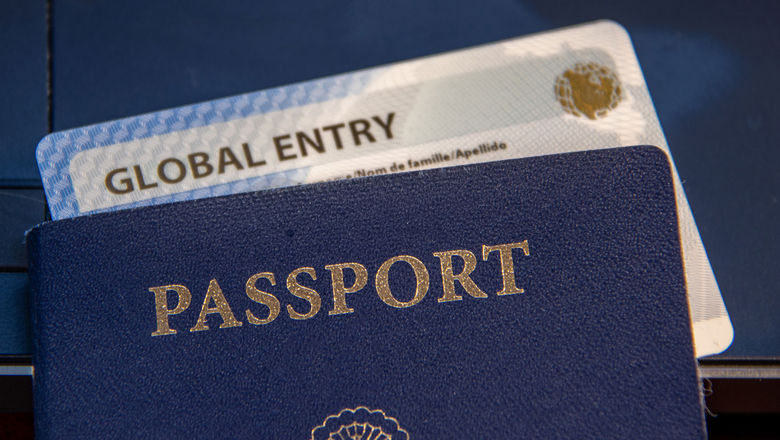
Bring your primary identification documents. A valid passport is required for all applicants. If you are a U.S. permanent resident, bring your permanent resident card. Carry a valid driver’s license as secondary identification. Have any prior travel documents or visas ready if they are relevant to your history. Do not bring unnecessary items that could slow down the process.
The interview itself is usually short. The officer will ask about your travel habits, employment, and any criminal history. Answer clearly and honestly. Do not volunteer extra information or argue with the officer. If you have a prior conviction, be prepared to explain it briefly and provide any supporting documentation. The goal is to show that you are a low-risk traveler.
Collect your valid passport, driver’s license, and permanent resident card (if applicable). Ensure all documents are current and not expired. CBP officers will scan these to verify your identity.
Check in at the enrollment center or port of entry. Arrive 10-15 minutes early to handle any administrative checks. Late arrivals may be rescheduled, delaying your approval.
Listen carefully to the officer’s questions. Answer truthfully and concisely. Do not provide unsolicited details or try to negotiate your eligibility. Your honesty is the fastest path to approval.
Compare Global Entry with TSA PreCheck and NEXUS
Global Entry is the most comprehensive option for international travelers, but it may be overkill if you only fly domestically. Understanding the differences in cost, coverage, and eligibility helps you choose the right program for your specific travel patterns.
The table below breaks down the core differences between Global Entry, TSA PreCheck, and NEXUS. Use this comparison to decide which program aligns with your needs.
| Feature | Global Entry | TSA PreCheck | NEXUS |
|---|---|---|---|
| Annual Cost | $100 | $78 | $50 |
| Primary Benefit | Expedited US Customs & TSA PreCheck | Expedited Domestic Security | Expedited US/Canada Entry & TSA PreCheck |
| Eligibility | US Citizens, LPRs, Eligible Foreigners | US Citizens, LPRs, Eligible Foreigners | US Citizens, Canadian Citizens, LPRs |
| Interview Location | US Preclearance or Enrollment Centers | US Enrollment Centers | US-Canada Border Crossings or Enrollment Centers |
No comments yet. Be the first to share your thoughts!